

Global take on environment and climate news
Provided by AGP
Asana Recovery Launches LGBTQ+ Addiction Treatment Program for Fountain Valley

Therapy sessions at Asana Recovery integrate identity, minority stress, and trauma into the same clinical work that addresses substance use — not as a separate track or an add-on module. The Orange County treatment center serves Fountain Valley and client

Asana Recovery's dedicated couples program offers an affirming clinical setting for partners in recovery together — a structure LGBTQ+ couples often struggle to find in mainstream addiction treatment, where same-sex relational dynamics are not always acco
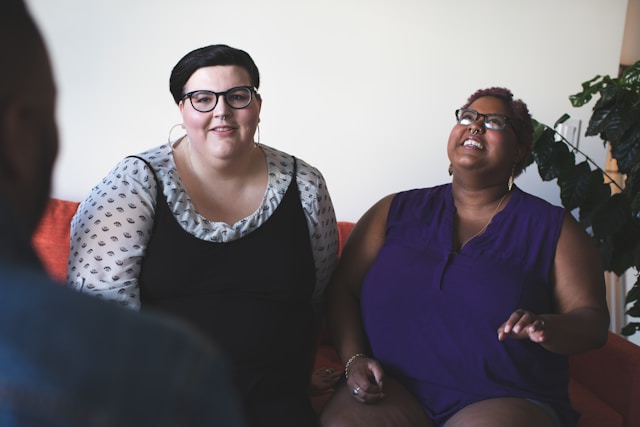
Asana Recovery's integrated therapeutic community holds a wide range of clients together — across identity, age, and stage of disclosure — without requiring anyone to compartmentalize who they are in order to recover.

Clinicians at Asana Recovery describe long-term recovery as closely tied to clients' growing comfort with who they are and how they relate to others — work that happens inside a connected community, not in isolation.

Asana Recovery incorporates family involvement — including chosen-family integration and partner involvement — where it is welcome and clinically appropriate, with attention to dynamics LGBTQ+ clients often navigate during recovery.
One in five clients identifies as LGBTQ+. Asana Recovery is now formalizing the integrated, identity-affirming program it has run quietly for years.
We don't treat identity as a category. We treat it as one part of a person's overall story, alongside trauma, family dynamics, and substance use.”
— Sheida Shavalian, Clinical Director, Asana Recovery
FOUNTAIN VALLEY, CA, UNITED STATES, May 13, 2026 /EINPresswire.com/ -- Twenty percent of clients at Asana Recovery, the Orange County addiction and mental health treatment center serving Fountain Valley and clients nationwide, identify as LGBTQ+. Today, the facility is formally launching the specialty program built around that reality — an integrated, identity-affirming, trauma-informed clinical model the center has been delivering for years without a formal name attached to it.
The program is positioned not as a separate track but as a named clinical commitment within Asana Recovery's existing therapeutic community. LGBTQ+ clients work alongside every other client in the program, supported by clinicians trained to address identity, minority stress, and trauma as part of the same treatment work — not as a parallel curriculum.
"For years, roughly one in five of our clients has been LGBTQ+. This isn't a new direction — it's a name for work we've been doing all along," said Mark Shandrow, CEO of Asana Recovery. "Formalizing the program signals to LGBTQ+ clients and their families across Fountain Valley and Orange County that affirming care here isn't a side offering or a marketing line. It's how the clinic operates."
A documented gap in addiction care
The clinical need is well established. The Substance Abuse and Mental Health Services Administration (SAMHSA) reports that LGBTQ+ adults experience substance use disorders at meaningfully higher rates than the general population and face persistent barriers to treatment — providers without cultural competency, environments where disclosure feels unsafe, and clinical models that pathologize identity rather than integrate it. National advocacy organizations have repeatedly pressed treatment providers to move beyond surface-level "LGBTQ-friendly" branding toward genuine clinical fluency.
For Fountain Valley residents and the surrounding Orange County communities, finding identity-affirming addiction care that goes beyond a rainbow logo has typically meant traveling to Los Angeles or further. Asana Recovery's program is a response to that local gap — not as a marketing posture, but as a description of work already in progress.
Identity as part of the story, not a category
"We don't treat identity as a category. We treat it as one part of a person's overall story, alongside trauma, family dynamics, and substance use," said Sheida Shavalian, Clinical Director at Asana Recovery. "A lot of the clinical work includes minority stress, experiences of rejection, and identity-related challenges. We don't separate that from treatment — it's part of the process. And helping clients become more comfortable with who they are, and how they relate to others, plays a big role in long-term recovery."
Minority stress — the cumulative psychological toll of chronic stigma, rejection, internalized shame, and identity concealment — has been clinically established as a meaningful contributor to substance use among LGBTQ+ adults. Asana Recovery's clinicians address it inside the same treatment relationships handling trauma and substance use, not as a supplementary module. The clinical work draws on cognitive behavioral therapy (CBT), psychodynamic therapy, and EMDR — the latter particularly relevant when minority stress, rejection experiences, or identity-related trauma are part of a client's history.
A wide range of clients, one integrated community
The program serves a demographically broad client population: executive professionals — including airline pilots, entertainment industry professionals, healthcare providers, and technology leaders navigating identity in high-visibility or high-stakes environments — alongside young adults still exploring identity for the first time. Clients arrive at every stage of disclosure, from those out for decades to those processing identity questions during treatment itself.
A 45-year-old executive navigating disclosure at work and a 22-year-old client navigating family rejection require different therapeutic emphases, but both benefit from a community that does not require them to compartmentalize who they are in order to recover. That integrated structure extends to dual-diagnosis treatment, which the facility describes as essential rather than supplementary for this population. Co-occurring conditions — depression, anxiety, PTSD, and eating disorders — are common, and Asana Recovery treats them concurrently with substance use rather than sequentially.
Family, couples, and life beyond treatment
The program incorporates family work where it is welcome and clinically appropriate, with attention to dynamics LGBTQ+ clients often face — estrangement and reconciliation, chosen-family integration, and partner involvement. Asana Recovery's dedicated couples program offers an affirming setting for partners in recovery together — a structure LGBTQ+ couples in particular often struggle to find in mainstream addiction treatment, where same-sex relational dynamics are not always accommodated.
"Recovery isn't just about stopping a substance," Shandrow added. "For our LGBTQ+ clients, like every client, it's about building a life and relationships that feel like theirs. That's the work, and that's what we measure ourselves against."
Programming built around the whole person
The LGBTQ+ specialty focus is integrated across Asana Recovery's full continuum of care: intensive outpatient (IOP), outpatient treatment, structured sober living, and the couples program — alongside concurrent dual-diagnosis treatment for co-occurring mental health conditions. Clients move through levels of care within the same therapeutic community, retaining consistent clinical relationships rather than starting over at each step.
This outpatient-anchored model is particularly suited to clients with established careers and relationships — those who need clinically rigorous treatment without stepping fully out of their lives to receive it. For LGBTQ+ professionals in Fountain Valley and across Orange County, that flexibility often determines whether treatment is accessible at all, allowing clients to remain close to home, work, and family throughout care.
The program is available to clients across Fountain Valley, Costa Mesa, Huntington Beach, the broader Orange County and Los Angeles areas, and to clients traveling from outside California.
About Asana Recovery
Asana Recovery is a licensed addiction and mental health treatment center based in Costa Mesa, California, serving Fountain Valley, Orange County, and clients nationally. The facility delivers evidence-based outpatient care for addiction and co-occurring mental health conditions — including intensive outpatient (IOP), outpatient programming, structured sober living, and a dedicated couples program for partners in recovery together — with specialty focus areas including professionals, young adults, dual-diagnosis clients, and LGBTQ+ individuals. Asana Recovery's clinical philosophy centers on individualized care delivered within an integrated therapeutic community, supporting each client's full story rather than treating any single dimension of identity, history, or diagnosis in isolation.
For more information about Asana Recovery's LGBTQ+ specialty program or to speak with admissions, visit asanarecovery.com or call (949) 438-4504.
Adam Shandrow
Asana Recovery
+1 562-972-3955
email us here
Legal Disclaimer:
EIN Presswire provides this news content "as is" without warranty of any kind. We do not accept any responsibility or liability for the accuracy, content, images, videos, licenses, completeness, legality, or reliability of the information contained in this article. If you have any complaints or copyright issues related to this article, kindly contact the author above.
